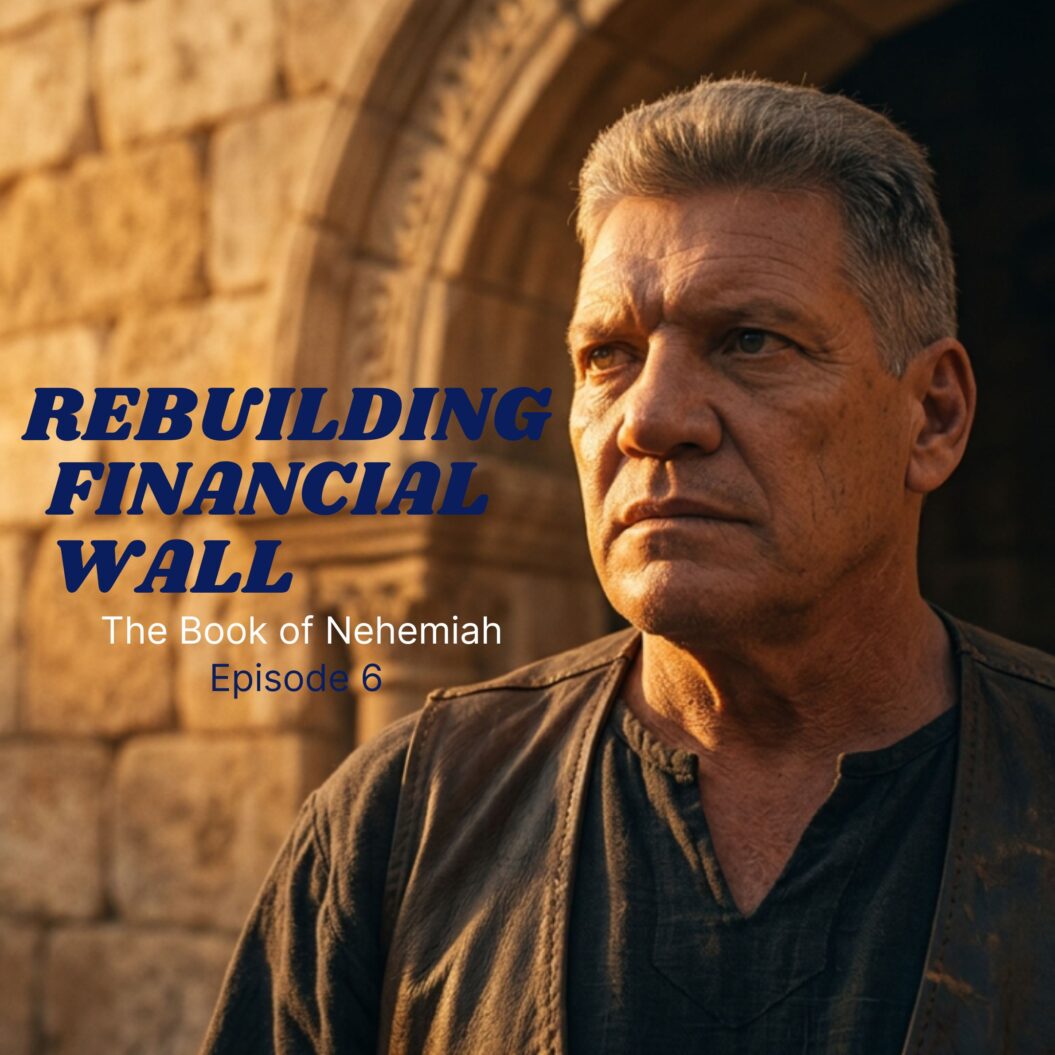
Build With One Hand, Defend With the Other: Rebuilding Your Finances
Have you ever decided that enough is enough?
You look at your debt, cut your spending, make a plan and decide that every spare dollar is going toward paying off what you owe.
For a while, everything seems to be working.
Then real life happens.
Your car needs an expensive repair. The washing machine breaks down. School expenses arrive. Your insurance needs to be paid. An unexpected medical bill lands in your inbox.
Suddenly, the money you were using to pay down your debt is gone.
And because you don’t have any cash available, you have to borrow again.
And just like that, the debt starts going back up.
This is one of the biggest traps people fall into when trying to rebuild their finances.
They concentrate so heavily on attacking the debt that they forget to protect themselves from the unexpected.
You Can’t Build Without Defence
When I think about this problem, I think about the story of Nehemiah rebuilding the walls of Jerusalem.
Nehemiah had an enormous project in front of him. He was rebuilding a defensive wall while facing opposition from people who wanted to stop the work.
He couldn’t simply tell everyone:
“Work faster!”
He needed a strategy that allowed the rebuilding to continue while protecting the people doing the work.
At one point, the workers were prepared to build with one hand and defend with the other.
That picture provides a powerful lesson for rebuilding your finances.
Your debt repayment is the building.
Your emergency fund and sinking funds are the defence.
You need both.
Don’t Throw Every Dollar at Debt
Paying down debt is important.
But if paying an extra $500 toward your credit card means you have absolutely nothing left in your bank account, you may have created another problem.
What happens when your car breaks down?
What happens when the fridge stops working?
What happens when you have an annual expense that you knew was coming but didn’t plan for?
You end up putting the expense back onto a credit card or taking another loan.
Now you’re trying to climb out of the same hole again.
That’s why I believe a financial rebuild needs defensive structures.
You aren’t slowing down your progress.
You’re protecting it.
Build Your Emergency Fund
An emergency fund gives you breathing room when something genuinely unexpected happens.
You don’t need to start with thousands of dollars.
Start where you are.
Your first goal might be a small cash buffer that prevents a minor emergency from becoming another debt.
Then, as your finances improve, you can gradually increase that reserve.
The important thing is to make it part of the plan.
Don’t wait for the emergency before you start preparing for it.
Use Sinking Funds for Predictable Expenses
Not every large expense is an emergency.
Some expenses are simply irregular.
Your car licence or registration comes around every year.
Insurance premiums come around.
School expenses come around.
Christmas comes around.
Vehicle maintenance comes around.
The problem is that we often treat these expenses as surprises even though we know they’re coming.
That’s where sinking funds can make a huge difference.
For example, if you know you’ll need $1,200 for an annual expense, putting aside $100 a month means the money is already waiting when the bill arrives.
Instead of saying:
“Where am I going to find the money?”
you can say:
“I’ve already planned for this.”
That is the difference between reacting to money and managing money.
Your Cash Buffer Is Your Financial Armour
Think about your financial rebuild like a wall.
Every debt payment is another brick.
Every improvement in your cash flow is another brick.
Every positive change in your spending habits is another brick.
But your emergency fund and sinking funds are part of the defensive structure protecting that wall.
Without them, one unexpected expense can knock a hole straight through your progress.
The objective isn’t simply:
“How quickly can I pay off my debt?”
The better question is:
“How can I pay off my debt without having to borrow again when life happens?”
That changes the entire strategy.
Then Comes the Plain of Ono
There is another part of Nehemiah’s story that I find extremely interesting.
When Nehemiah’s enemies couldn’t stop the construction through direct opposition, they changed tactics.
They invited him to come down from the wall and meet them on the plain of Ono.
It sounded reasonable.
It could have looked like an opportunity to negotiate.
But Nehemiah understood something important:
If he came down from the wall, the work would stop.
His response was essentially:
“I am doing a great work and I cannot come down.”
That is a powerful financial principle.
What Is Your “Ono”?
Your financial distractions probably won’t arrive looking like disasters.
They may look like opportunities.
A sale.
A new phone.
A holiday.
A new car.
A business opportunity.
A night out.
A lifestyle upgrade.
A “buy now, pay later” offer.
Something your friends have that you suddenly feel you need.
None of these things necessarily have to be bad.
But during a financial rebuild, you need to ask:
Does this support the wall I’m building?
Create Your Own ONO Policy
Before taking on a new financial commitment, ask yourself three questions:
1. Is it necessary?
Do I actually need this right now?
2. Does it support my rebuild?
Will this decision move me toward my financial goal or away from it?
3. Can it wait until Day 53?
If it isn’t necessary and doesn’t support the rebuild, postpone it.
This doesn’t mean you’ll never buy it.
It simply means not now.
There is tremendous power in being able to say:
“Not now. I’m rebuilding.”
Protect Your Attention
Financial discipline isn’t just about mathematics.
It’s also about your environment.
Every day we’re exposed to things designed to make us spend money.
Shopping apps send notifications.
Emails advertise sales.
Social media shows us what other people are buying.
Friends invite us to spend.
Advertising tells us that we need the latest version of everything.
If you’re constantly surrounded by spending opportunities, you’re making your financial rebuild harder than it needs to be.
So make your environment work for you.
Unsubscribe from promotional emails.
Delete shopping apps you don’t need.
Turn off unnecessary notifications.
Stop following accounts that constantly encourage you to spend.
Give yourself fewer opportunities to make unnecessary financial decisions.
Your attention is valuable. Protect it.
Your 52-Day Financial Sprint
The idea of 52 days isn’t about believing that every financial problem can magically disappear in 52 days.
It’s about creating a focused season of rebuilding.
For the next 52 days, you can make your financial foundation the priority.
During that period:
Attack your debt.
Build your emergency buffer.
Create sinking funds.
Track your spending.
Reduce unnecessary expenses.
Avoid creating new debt.
Protect yourself from financial distractions.
Review your progress every week.
You’re building the wall.
But you’re also defending it.
Write Your Own ONO Statement
I encourage you to write your own statement and put it somewhere you will see it every day.
On your desk.
On your phone.
Inside your wallet.
Next to your computer.
Something as simple as:
“I am rebuilding my financial foundation. My priority is to strengthen my finances, reduce my debt and protect my progress. Non-essential financial decisions can wait until Day 53.”
The words are simple.
The discipline is in applying them.
The Goal Isn’t Just to Become Debt-Free
This is something I’ve learned through years of working with people and their finances.
Getting out of debt is important.
But staying out of debt requires a system.
If every unexpected expense sends you back to borrowing, the problem isn’t simply the debt.
The problem is the structure supporting your financial life.
That’s why the rebuild needs both sides.
Build with one hand.
Defend with the other.
Attack the debt.
Build cash reserves.
Prepare for predictable expenses.
Protect yourself from unnecessary distractions.
And keep your eyes on the wall you’re building.
Your Practical Rebuild Action Plan
This week, take these seven steps:
1. List your current debts.
Know exactly what you owe.
2. Calculate your essential monthly expenses.
Know what it actually costs to keep your household running.
3. Start an emergency fund.
Even a small amount is a beginning.
4. Identify your predictable annual expenses.
Turn them into monthly sinking-fund contributions.
5. Create your ONO policy.
Decide what you will postpone during your financial sprint.
6. Remove spending triggers.
Unsubscribe, delete and switch off unnecessary notifications.
7. Review your progress every week.
Don’t wait until the end of the month to discover where your money went.
Keep Building
Your financial rebuild doesn’t have to be perfect.
It needs to be sustainable.
There will be unexpected expenses.
There will be setbacks.
There will be days when you wonder whether you’re making progress.
That’s exactly why you need a financial structure that can withstand the pressure.
Nehemiah didn’t stop building because there was opposition.
He adapted.
He protected the work.
He kept the focus.
And eventually, the wall was completed.
Your financial wall can be rebuilt too.
Build with one hand. Defend with the other.
And when the distractions come calling, remember your ONO policy:
“I am doing a great work, and I cannot come down.”